Best hair care ingredients for dry hair (and what to avoid)
The best hair care ingredients for dry hair: conditioning agents, silicones, oils, humectants and proteins explained, what to avoid, and a simple routine for dry, damaged hair.
هذا الدليل بالإنجليزية حاليًا، والنسخة العربية قادمة.
كتبه فريق Glowpedia · مبني على 2 مصادر طبية · كيف نكتب أدلتنا
في هذه الصفحة
Dry hair is hair that has lost its natural oils and has a rough outer layer (the cuticle). It tangles, frizzes and breaks more easily. The right ingredients cannot rebuild a hair, but they can smooth it, soften it and protect it from more damage.
Quick answer: Look for conditioning agents (behentrimonium, polyquaternium), silicones (dimethicone, amodimethicone), light oils (argan, coconut, jojoba), humectants (glycerin, panthenol) and, for damaged hair, hydrolyzed proteins or bond builders. Condition after every wash, use a gentle shampoo on the scalp only, and protect hair from heat.مستعجل؟ شاهد المنتجات الـ3 التي اخترناها
Why is my hair dry?
- Hair type. Curly and coily hair is drier because scalp oil travels down a curl more slowly.
- Damage. Bleach, color, relaxers and heat lift the cuticle and break down the hair's protective surface.
- Washing habits. Strong shampoos on the full length, very hot water and rough towel drying.
- Weather. Sun, wind, sea water, chlorine and dry indoor air.
The best ingredients for dry hair
| Ingredient | Look for on the label | What it does |
|---|---|---|
| Conditioning agents | Behentrimonium chloride, cetrimonium chloride, polyquaternium-10 | Positively charged: they stick to damaged hair, smooth it and reduce static |
| Silicones | Dimethicone, amodimethicone, cyclopentasiloxane | Coat and lubricate, make combing easier, help protect from heat |
| Oils | Argan, coconut, jojoba, olive, shea butter | Soften, add shine; coconut oil can get into the hair |
| Humectants | Glycerin, panthenol (vitamin B5), aloe | Draw water into the hair |
| Fatty alcohols | Cetyl, cetearyl, stearyl alcohol | Softening "good" alcohols, not drying |
| Proteins | Hydrolyzed keratin, wheat or silk protein | Fill weak spots on damaged hair |
| Bond builders | Maleic acid, bis-aminopropyl diglycol dimaleate | Help repair bonds broken by bleach and color |
Conditioning agents
Damaged hair carries a negative charge. Conditioning agents carry a positive charge, so they cling to the most damaged parts, smooth the cuticle and cut friction. This is why conditioner makes such a difference to dry hair. See conditioning agents.
Silicones
A review of hair cosmetics describes silicones as the most effective conditioning ingredients: they lubricate the hair, reduce friction and may help protect against heat. Water-soluble or "amino" silicones (amodimethicone) are a good choice for damaged hair. If you notice buildup, a clarifying shampoo once in a while removes it. See silicones.
Oils
Most oils coat the hair. Coconut oil is different: its small, straight molecules can get inside the hair. In a study summarized in the same review, coconut oil used before or after washing was the only one of three oils tested (with mineral and sunflower oil) that reduced protein loss. A few drops of oil on damp ends also helps with frizz. See plant oils and butters and hair oils.
Humectants
Glycerin and panthenol attract water. They work well in most weather. In very humid weather some people find they add frizz, and in very dry air they can pull water out of the hair; pairing them with an oil or silicone helps.
Proteins and bond builders
For bleached, colored or heat-damaged hair, small hydrolyzed proteins can fill gaps in the hair's surface, and bond builders can help repair bonds broken by chemical treatments. Too much protein can make some hair feel stiff: our guide to protein vs moisture explains how to balance them.
What to avoid (or use less) with dry hair
- Strong sulfate shampoos used on the full length. They clean well but can leave dry hair rough. Wash the scalp and let the foam run down. Glowpedia marks sulfate cleansers on every product page.
- Drying alcohols high on the list of leave-in sprays (alcohol denat., isopropyl alcohol). Fatty alcohols are fine.
- Daily hot tools without heat protection. Use a heat protectant and a medium setting.
- Rubbing with a towel. Pat or squeeze hair dry instead.
A simple routine for dry hair
- Shampoo the scalp only, as often as your scalp needs. The American Academy of Dermatology notes that dry, curly or thick hair may only need washing when needed, at least every 2 to 3 weeks; an oily scalp may need it more often. See shampoos.
- Condition every time you shampoo. Dry or curly hair: from roots to ends. Fine hair: ends only. See conditioners.
- Detangle gently with a wide-tooth comb while conditioner is still in, starting at the ends.
- Leave-in conditioner or a few drops of oil on damp ends. See leave-in.
- Mask once a week for very dry or damaged hair. See hair masks.
- Heat protectant before blow-drying or styling.
When dry hair is not just dry
See a dermatologist if your hair is breaking off in patches, your scalp is itchy, red or flaky, or you notice thinning. These can have causes that products will not fix, such as traction, scalp conditions or medical causes. Our guide to split ends and breakage covers everyday damage.
Products to try
جاهز للتجربة؟ ابدأ بمنتج واحد وأضف التالي عندما تعتاد بشرتك أو شعرك عليه. اضغط الزر لترى سعر اليوم والتقييمات على أمازون.
A rich moisturizing mask with shea butter and oils.
شاهد السعر على أمازون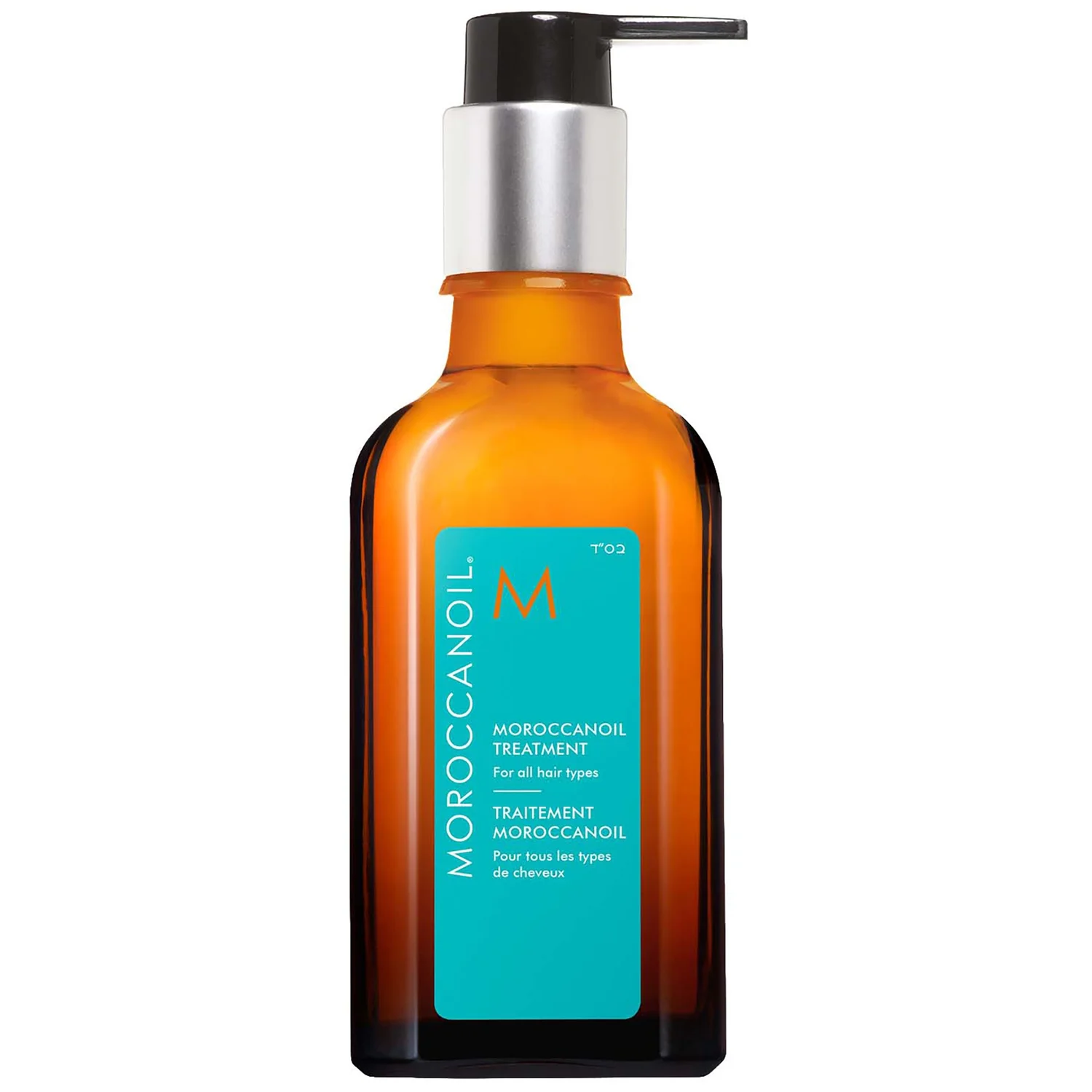
An argan oil and silicone blend for shine and softness.
شاهد السعر على أمازوناخترناها من توصيات الخبراء ومحرّري الجمال، ولم نجرّبها بأنفسنا. قد نحصل على عمولة إن اشتريتِ عبر هذه الروابط، دون أي تكلفة إضافية عليك.
FAQ
Are silicones bad for dry hair?
No. Silicones are some of the best ingredients for dry, damaged hair. If your hair feels heavy, use a lighter or water-soluble silicone and clarify now and then.
Is coconut oil good for dry hair?
For many people, yes. It can reduce protein loss and adds softness. Very fine or low-porosity hair may feel greasy; use a few drops only.
Should I avoid sulfates?
Not necessarily. Sulfate shampoos are fine for an oily scalp. If your hair is dry, apply shampoo to the scalp only, or choose a milder one.
How often should I wash dry hair?
Only as often as your scalp needs. Dry, curly or thick hair often does well with washing once or twice a week; condition every time.
Sources
- Hair cosmetics: an overview (International Journal of Trichology, via PMC)
- Dermatologists share tips for healthy hair (American Academy of Dermatology)